Years
Distinguished Guests
Cities
Current events refracted through a historical lens
Our events approach issues in a manner that moves beyond the grind of day-to-day politics and instead places value on long-term strategic thinking. The Cambridge Roundtable regards itself as an exercise in applied history, seeking to illuminate current challenges and choices by analysing historical precedents and analogues.
Previous Roundtables
Cambridge (Annual)
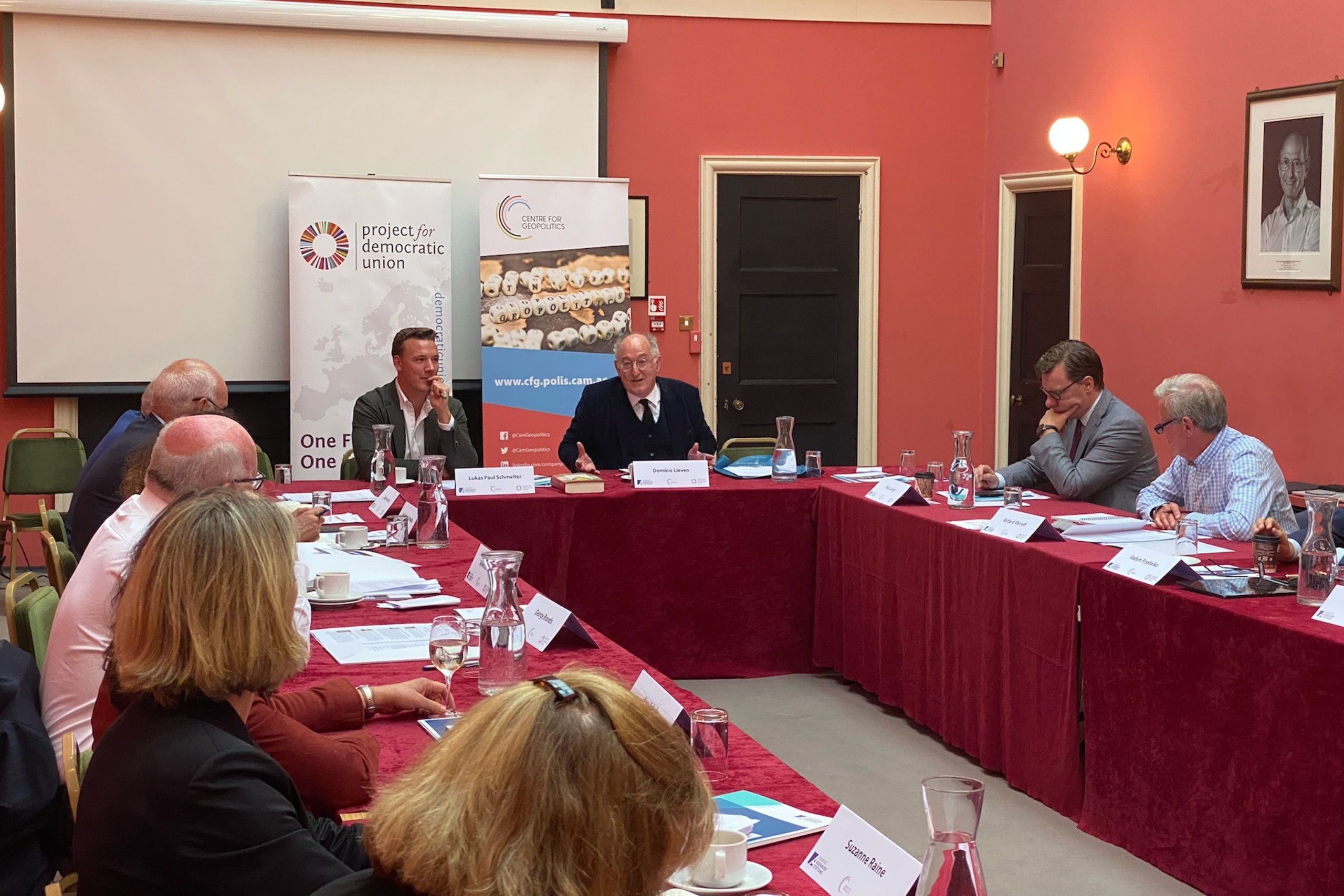
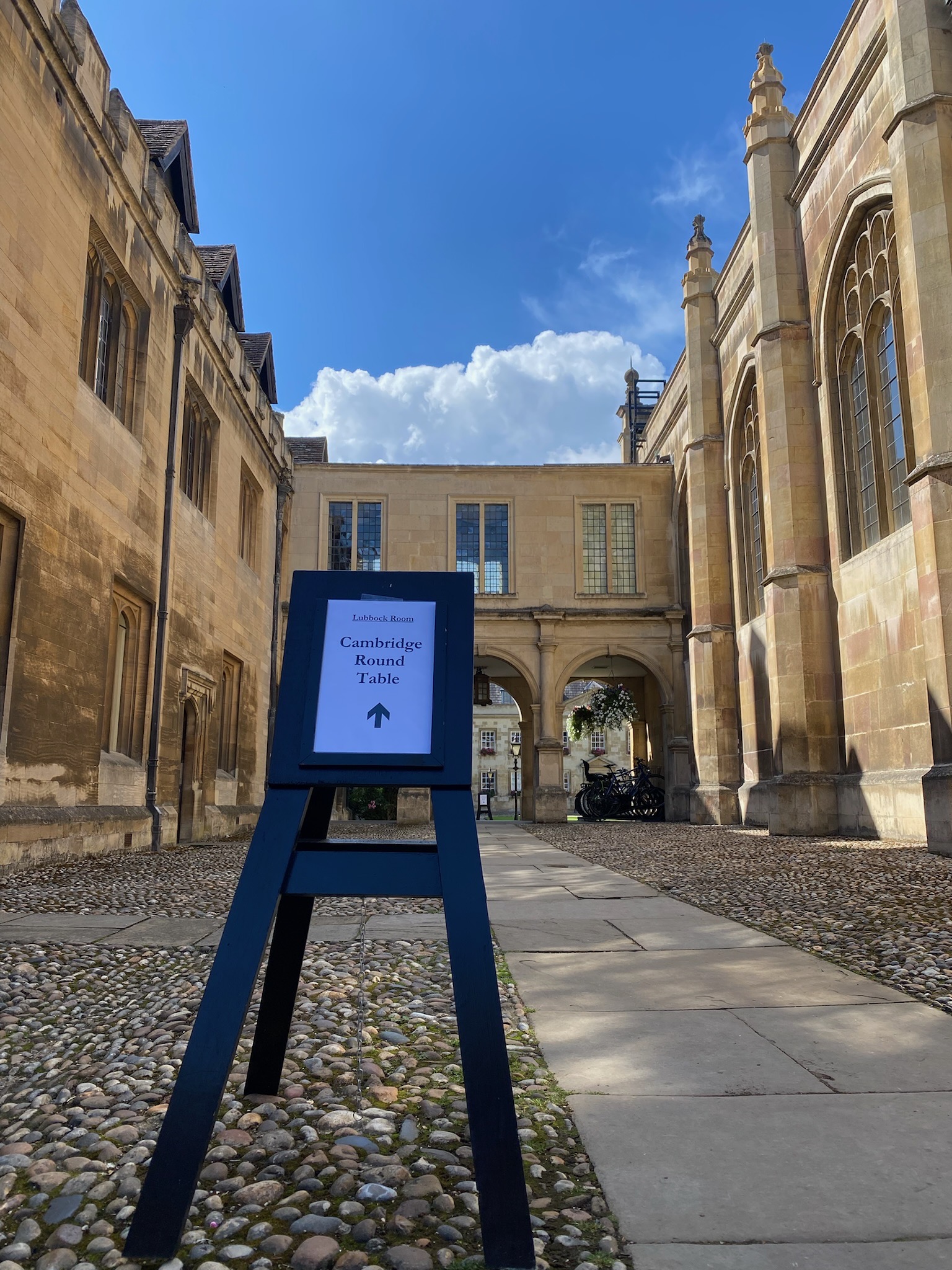
The Cambridge Roundtable on European Order is an annual meeting hosted at Peterhouse, Cambridge’s oldest college. It approaches issues in a manner that moves beyond the grind of day-to-day politics and instead places value on long-term strategic thinking. It regards itself as an exercise in applied history, seeking to illuminate current challenges and choices by analysing historical precedents and analogues. Learn More

Paris (2022)
The Cambridge Centre for Geopolitics, the Jacques Delors Institute, Alliance4Europe and Project for Democratic Union, & Airbus SE assembled a leading group of policymakers in Paris. The session set out to assess the state of the European order under truly exceptional circumstances. Russia’s unprovoked invasion of Ukraine, and the armed conflict that has ensued for close to two months, has concentrated the minds of western policymakers and tabled a range of longstanding issues with a new urgency.

Gdánsk (2023)
Strategically placed on the mouth of the Vistula River on the Baltic Sea, Gdańsk has long been a booming centre for trade as well as a melting pot of culture and different ethnic groups. The port city has also played a significant role in Europe’s history. From the power struggles over the city’s administration that lead to the invasion of Poland by Nazi Germany in 1939, to the shipyard at the heart of the city which in 1980 heralded the end of communist Poland and fostered the trade union Solidarity.
Rome (2025)
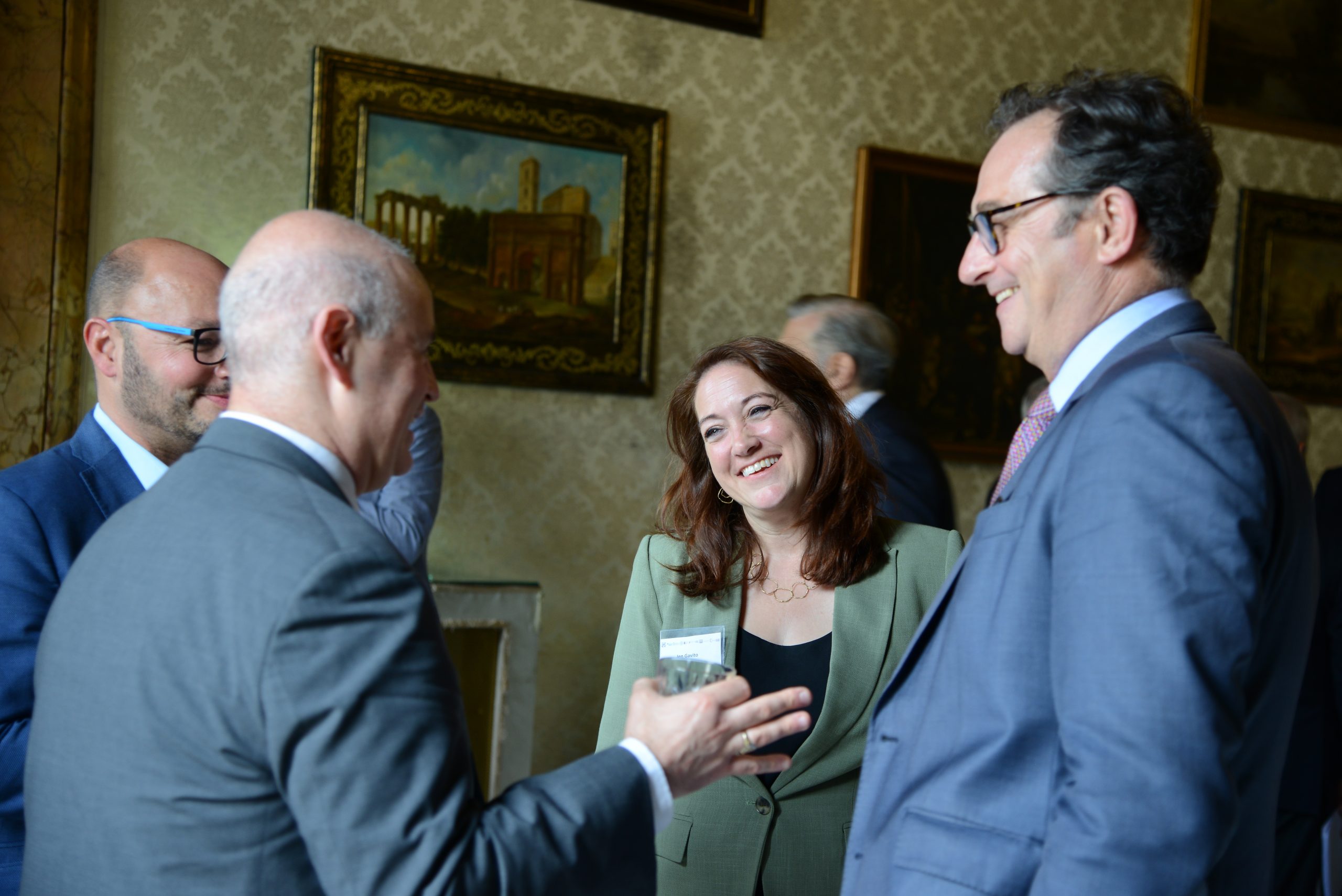
Rome, as the capital of Italy, plays a special role for the southern flank of the European Union and is a decisive, often underestimated, geopolitical player in the Mediterranean region and the Adriatic Sea, which this instalment of the Cambridge Roundtable series aimed to comprehensively reflect. In addition to that, Rome is the seat of the Vatican, not only a religious centre, but also a strategic place where important diplomatic initiatives and dialogues take place which have an impact on the Mediterranean region. Read the report.
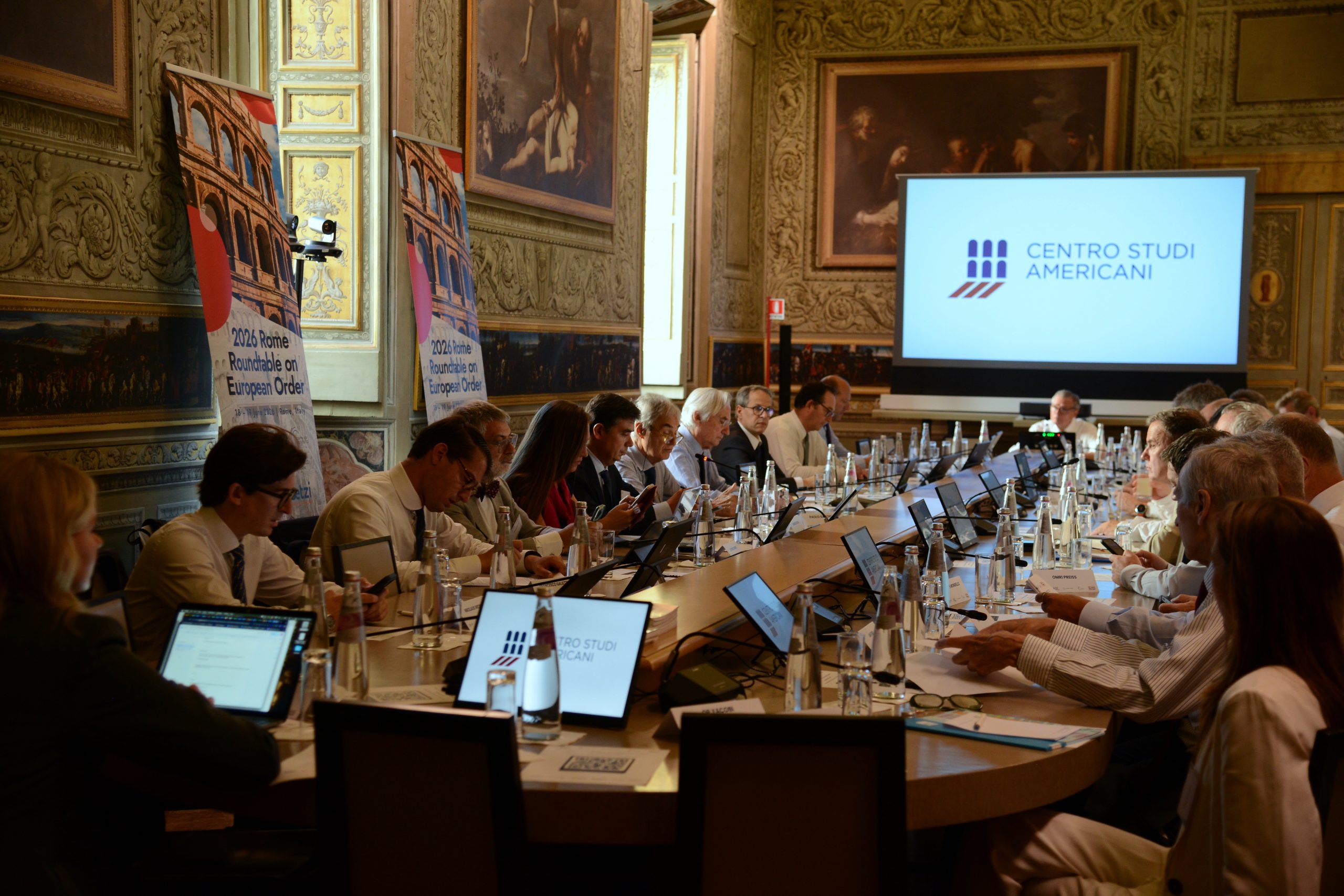
Rome (2026)
Following the success of the 2025 edition, the Rome Roundtable returned in 2026 to continue the conversation on Europe’s future, security and geopolitical challenges. Against a backdrop of political, economic, technological and social transformation, the Roundtable brought together perspectives on Europe’s changing strategic environment and its role in the Mediterranean and beyond. Rome once again provided a unique setting for these discussions, at the intersection of European, Mediterranean and international affairs. Read the report.
Previous Guests

An Exercise in Applied History
Europe has always been shaped by an order – or orders. Historically, most of these have been internal to the continent, though over the past one hundred years external powers have become more prominent.
Today, we once again find ourselves in the force-field of competing orders: the European Union, Brexiting Britain, Trump’s USA, Putin’s Russia and the PRC. Many of these actors are themselves internally conflicted about their place in the world and attitude to Europe.
NATO and the Schengen Area struggle to cope with the interlocking challenges of territorial aggression, terror and migration. A group of leading historians, politicians, analysts and businessmen gather annually at Cambridge’s oldest college, to discuss the European order in a time of exceptional flux.
The Cambridge Roundtable is convened by


together with

and



Sponsors and Supporters